
Ayurvedic Alchemy in the Kitchen
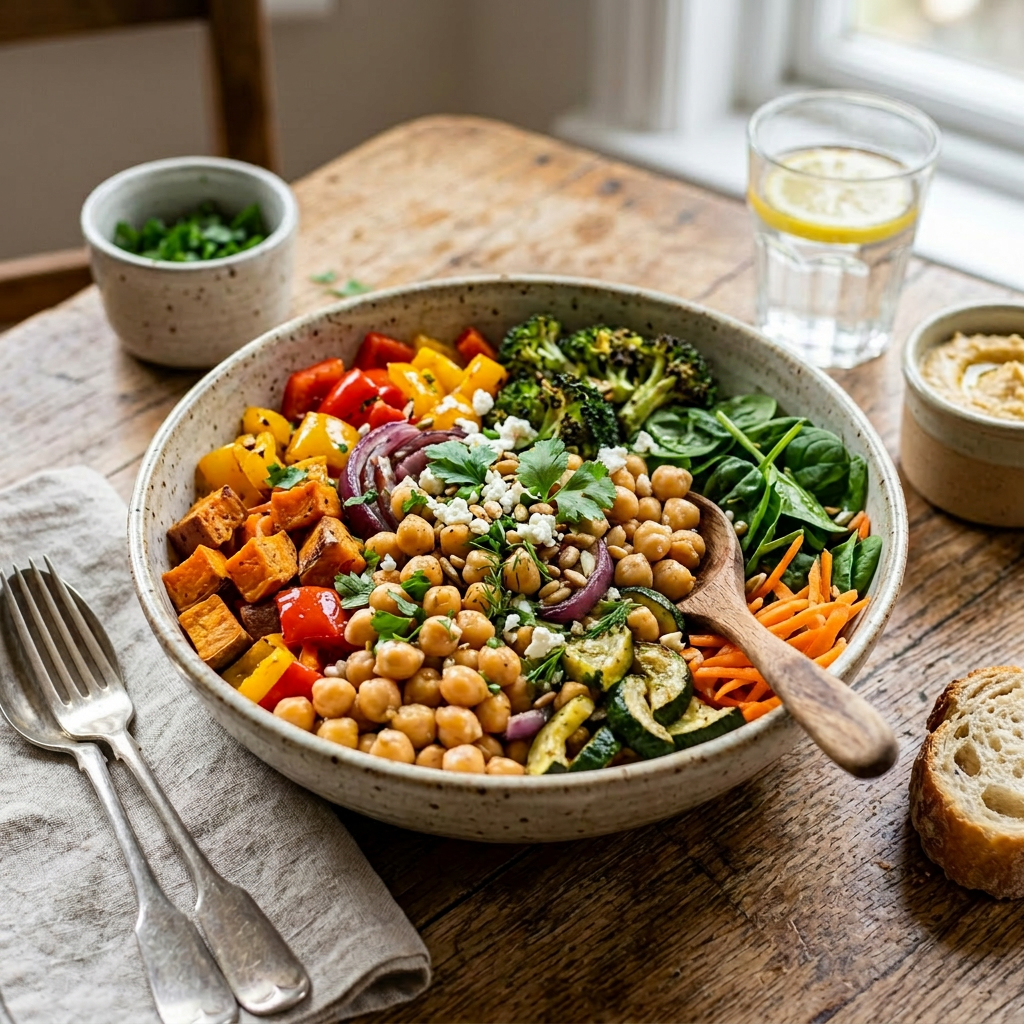
Recipe: Vegetable and Chickpea Sheet Pan Meal
Welcome to the first post in this new series, where we take everyday recipes and gently transform them through the lens of Ayurveda, bringing them into balance with your unique constitution and the rhythm of the seasons.
This week, we’re exploring a simple and versatile dish: a Vegetable and Chickpea Sheet Pan Meal inspired by a favorite from Oh My Veggies. I often turn to sheet pan meals when I want something nourishing, flexible, and easy to adapt for different needs in the same household.
The Original Dish
The original recipe features chickpeas, sweet potatoes, broccolini, zucchini, bell peppers, red onion, and carrots, roasted with olive oil, tamari, and earthy spices.
From an Ayurvedic perspective, this dish is hearty and grounding but also leans toward heavy, oily, and slightly drying, depending on preparation.
Seasonal Lens (Ritucharya)
In late April and early May, we are in spring (Vasanta Ritu), a season governed by Kapha dosha, which carries qualities of cool, heavy, and moist.
To stay balanced during this time, we favor foods that are:
- Light
- Warming
- Gently drying
Seasonal Adjustments:
- Reduce the sweet potato (heavier, denser)
- Increase broccolini and bell peppers (lighter, more stimulating)
- Use a smaller amount of mustard oil instead of olive oil for a warming effect
- Add spices like black pepper or fresh ginger to support digestion and clear lingering winter heaviness
The Dosha Lens
Vata (Air & Ether)
Goal: Grounding, warming, and hydrating
Vata types can be challenged by the dry nature of roasting and the gas-producing quality of chickpeas.
Adjustments:
- Favor carrots and sweet potatoes over zucchini (which can be too cooling)
- Cook vegetables thoroughly until soft and well-oiled
- Use ghee or a generous amount of olive oil
- Add fresh ginger and a pinch of hing (asafoetida) to support digestion
Serving Tip:
Serve with warm basmati rice and a spoonful of yogurt or tahini for added moisture and grounding.
Pitta (Fire & Water)
Goal: Cooling, soothing, and moderating heat
Pitta types benefit from reducing overly heating ingredients.
Adjustments:
- Keep zucchini, broccolini, and sweet potato
- Minimize or remove the red onions and bell peppers
- Use coconut oil or ghee instead of olive oil
- Season with coriander and fennel, and finish with fresh cilantro
Serving Tip:
Pair with a cooling cucumber raita or slices of avocado.
Kapha (Earth & Water)
Goal: Light, stimulating, and clearing
Kapha types benefit from reducing heaviness and increasing the spices.
Adjustments:
- Significantly reduce the sweet potato
- Increase broccolini, bell peppers, and red onion
- Add bitter greens like kale toward the end of cooking
- Use minimal oil
- Spice generously with cumin, black pepper, paprika, and a pinch of cayenne
Serving Tip:
Enjoy on its own or with a small portion of quinoa. Skip heavy sauces.
Universal Ayurvedic Upgrades
No matter your dosha, these simple shifts can support digestion and vitality:
- Fresh over dried: Use fresh garlic and ginger to enhance prana (life force)
- The hing secret: A small pinch of asafoetida added to warm oil helps make legumes more digestible and reduces bloating
- Cook with awareness: Even simple meals become more nourishing when prepared with intention and presence
Try It Your Way
Have a recipe you’d like to see transformed through an Ayurvedic lens? Share it in the comments or send it my way, I’d love to explore it with you.
If you’re ready to explore your own path to balance, I invite you to reach out or follow along.
May you find balance in every bite.


Leave a Reply