
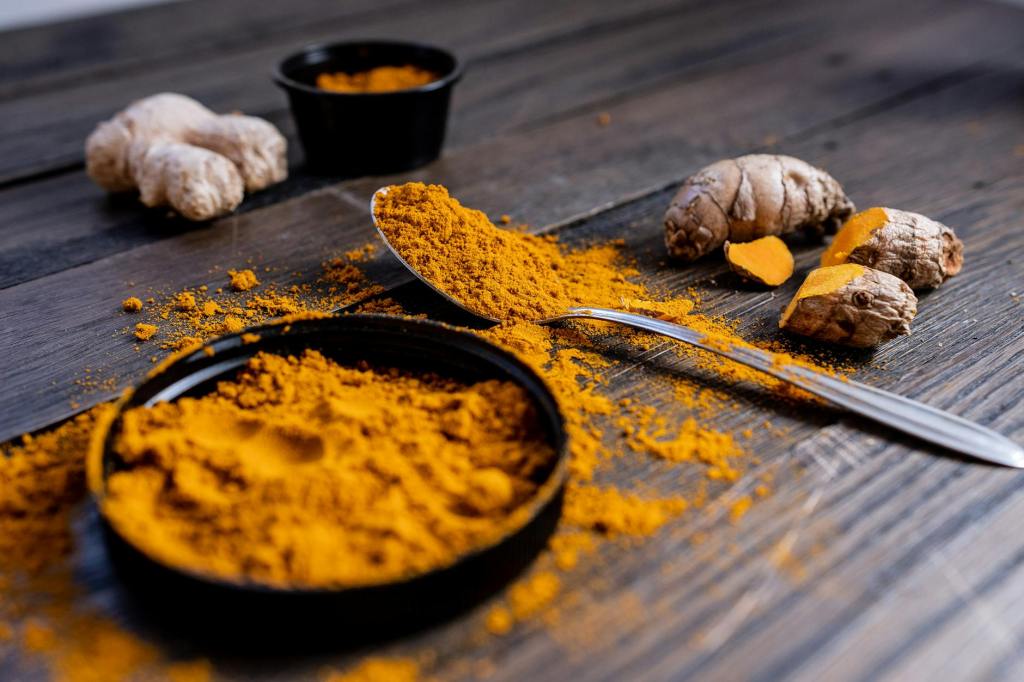
Turmeric is, in many ways, an essential, almost sacred, spice in Ayurveda.
Why is this so? Because it has the ability to support balance in the body, nourish the mind, and, for me, serves as a bridge to ancient traditions of health and well-being.
Ayurvedic Profile
- Botanical Name: Curcuma longa
- Family: Zingiberaceae
- Taste (Rasa): pungent, bitter, astringent
- Energetics: heating
- Dosha Impact: decreases Vata and Kapha; generally neutral for Pitta, though excess may aggravate
A Personal Beginning
Turmeric was always present in my childhood home, tucked quietly into my mother’s spice cabinet, but it was rarely, if ever, used.
Many years ago, I attended a yoga class where someone began speaking about the health benefits of turmeric. That moment sparked my curiosity and led me to begin studying on my own. That path, almost inevitably, brought me to Ayurveda.
And something about Ayurveda resonated deeply, like a call home after a long absence.
In Ayurveda, food is medicine. Hearing that felt less like learning something new and more like remembering something I had always known.
Why Ayurveda Values Turmeric
In Ayurvedic practice, turmeric is considered a powerful ally when used with intention and moderation.
Its heating energy helps rekindle agni, our digestive fire, supporting the body’s ability to process and assimilate what we take in. It is also traditionally used to help reduce ama, or toxins, that accumulate when digestion is impaired.
Turmeric is known for its wide range of supportive properties, including:
- antioxidant
- anti-inflammatory
- antiviral
- antibacterial
- Antifungal
Because of its unique balance of qualities, turmeric can support all three doshas when used appropriately, another reason it holds such an important place in the Ayurvedic kitchen.
How I Use Turmeric in My Kitchen
Turmeric has become a daily companion in my kitchen and self-care rituals.
I use it in teas, in cooking, and even in an herbal paste for achy joints. And yes, I add it to my daily French press coffee.
While there are many well-loved turmeric recipes, like Golden Milk, I find myself returning to simple preparations that feel grounding and supportive.
The tea below is one I reach for during the winter months. It nourishes my constitution, though it may not be suitable for everyone. Ayurveda reminds us that there is no one-size-fits-all approach; each of us has unique needs.
From My Kitchen: Ginger & Turmeric Tea
Cook Time: 10 minutes
Servings: Approximately 4–5 cups
Ingredients:
- 32 oz water
- ½ inch fresh ginger, peeled and chopped
- ⅛ tsp turmeric powder
Instructions:
- Bring 32 ounces of water to a boil.
- While the water heats, peel and chop the fresh ginger.
- Place the ginger and turmeric into a 32-ounce mason jar or heat-safe container.
- Pour the boiling water over the herbs.
- Steep for 5–7 minutes.
- Sip throughout the day.
Note: This tea has a mild diuretic effect, so it’s best enjoyed earlier in the day rather than close to bedtime.
Turmeric reminds us that healing doesn’t have to be complicated. Sometimes it begins with a single ingredient, used with awareness, intention, and care.
In the Ayurvedic kitchen, even the simplest spices carry the potential to nourish both body and soul.
Follow along for more Spice Saturday inspiration, or reach out if you’re curious about bringing Ayurvedic wisdom into your own daily life.


Leave a Reply